







Written by Donny Yosua, Magnum Estate Analyst ·
Reviewed by Magnum Estate legal & investment desk ·
Last updated 3 June 2026
"4-6% Net yield, self-managed (not 12-18%) · 10-15% Net yield, professionally managed · ~0.1% Annual PBB land & building tax · 6.95M 2025 foreign arrivals (+9.7%)"
Key figures (2026)
Bali property investor mistakes 2026: summary
Bali property investor mistakes 2026, the short answer: most foreign buyers lose money not because Bali is a bad market, but because of seven avoidable errors. The market is still strong (6.95M arrivals in 2025, +9.7%), but it is now selective and enforcement-heavy, so weak homework gets punished.
- Legal / nominee: faking freehold via a nominee breaches the Agrarian Law, use Leasehold or a PT PMA holding HGB.
- Zoning / green zone: “villa-ready” land in a green/agricultural zone or without PBG/SLF cannot legally be rented.
- Overpaying: headline listing averages overstate growth; anchor to land price per m² instead.
- Yield trap: quoted gross 12-18% is not net, net is ~4-6% self-managed, ~10-15% pro-managed.
- Management & tax: villas are not passive; PBB is only ~0.1%/yr but rental and transaction taxes plus fees erode returns.

"Transparency: Magnum Estate develops property in Bali, so we have a commercial interest. This guide is educational, not investment or legal advice, verify figures independently and consult a certified Indonesian notary (PPAT) and tax advisor before buying."
Transparency
This guide maps the most common Bali property investor mistakes 2026 and exactly how to avoid each one. By 2026, Bali’s market has moved from its post-pandemic boom into a more selective, enforcement-heavy phase: prices keep rising in prime hotspots, but authorities are sealing non-compliant buildings and oversupply is exposing weak projects. The buyers who lose money rarely do so because Bali is “bad”, they do so because they skipped legal, zoning, valuation or yield homework. Below are the seven costly errors, with the fix for each.
The 7 mistakes at a glance
| Mistake | Why it costs you | How to avoid it |
|---|---|---|
| 1. Nominee / weak legal structure | Nominee “freehold” can be void under the Agrarian Law; total loss of the asset | Use Leasehold (Hak Sewa) or PT PMA + HGB; notarise with a PPAT |
| 2. Green-zone land & missing permits | Plot can’t legally host a rental villa; building sealed; no PBG/SLF | Check the ITR zoning map and confirm PBG/SLF + Pondok Wisata before buying |
| 3. Overpaying on hype | Listing “averages” imply ~50% growth that isn’t real; you buy the top | Anchor to land price per m² and like-for-like growth of ~7-15%/yr |
| 4. Skipping due diligence | Hidden title disputes, build defects, un-rentable status | Title + zoning + permit + structural inspection before deposit |
| 5. Gross-vs-net yield confusion | Expect 12-18%, keep 4-6%; budget breaks | Model net: ~4-6% self-managed, ~10-15% pro-managed |
| 6. Villa as a passive asset | Poor reviews, deferred maintenance, flat pricing kill yield | Professional, data-driven management and proactive maintenance |
| 7. Ignoring taxes & holding costs | PBB, rental & transaction tax and upkeep erode the net | Model PBB (~0.1%/yr) + rental tax + fees into ROI from day one |
| Distilled from Bali market and legal guidance, 2025-2026. See the per-mistake sections below. |
Mistake 1: using a nominee or a weak legal structure
The single most dangerous of the Bali property investor mistakes 2026 is faking freehold. Foreigners cannot hold Hak Milik (freehold) directly, so some buyers still use a local “nominee” to register the land in an Indonesian name. Legal research is consistent: nominee agreements conflict with Indonesia’s Agrarian Law No. 5/1960 and offer weak protection, in a dispute the foreigner can lose the asset entirely.
The fix: use a structure the law actually recognises, Leasehold (Hak Sewa) for 25-30 years (often extendable) or a PT PMA company holding Hak Guna Bangunan (HGB) for commercial operation. Match the structure to your strategy and notarise through a certified PPAT. See our
legal guide to buying property in Bali as a foreigner
and the difference between freehold and leasehold in Bali.
Mistake 2: buying green-zone land or property without permits
Authorities are enforcing spatial planning far more tightly in 2026, especially along the coast and in tourism corridors, and are sealing non-compliant buildings. The classic trap: land in a green / agricultural (jalur hijau) zone marketed as “villa-ready,” or a villa operating without valid PBG (building approval) and SLF (building worthiness) certificates. A plot that can’t legally host a daily-rental villa is worth a fraction of what you’d pay for a compliant one.
The fix: before any deposit, check the official ITR spatial-plan map for the exact coordinates, confirm the plot allows tourism/residential use, and verify that the relevant licence, Pondok Wisata or Sertifikat Standar, is genuinely obtainable. Read our breakdown of Bali zoning and green-zone rules before you commit.
Mistake 3: overpaying because of hype and “average” prices
You will see a widely-cited figure that average villa listing prices jumped from about USD 321,000 to USD 484,000 in 12 months. That looks like ~50% appreciation, but it mostly reflects a shift in the mix of stock toward larger, prime-area builds, not like-for-like growth. Real like-for-like price growth is closer to 7-15% a year in strong micro-markets, and land has appreciated roughly 15-30% over the past two years. Anchoring to a headline average is how investors buy the top.
| Area | Land price per m² (USD) | Per are (IDR) |
|---|---|---|
| Seminyak / Umalas | ~$900-1,900 | IDR 1.5-3B+ |
| Canggu (central) | ~$530-1,560 | IDR 1.2-2.5B |
| Uluwatu / Bukit | ~$310-940 | IDR 0.5-1.5B |
| Ubud | ~$250-750 | IDR 0.4-1.2B |
| Emerging (Tabanan, Seseh, N. Bali) | < $250 | varies |
| Land quoted per are (100 m²), converted at ~IDR 16,000/USD. Source: Paradyse Homes 2026 (per-are, AirDNA-benchmarked); COCO 2026. |
The fix: price the deal on land per m² for the exact micro-location, not on island averages. For the full area-by-area map, see our Bali property prices 2026 guide and compare hotspots in Canggu vs Uluwatu.
Mistake 4: skipping proper due diligence on the villa
Two villas can look identical online yet differ radically in legal security, build quality and rental performance. In Bali’s climate, humidity often 70-90%, heavy rain and coastal salinity, weak waterproofing, drainage and materials surface fast, and industry technical audits suggest a majority of newly completed villas show hidden defects within the first 6-12 months. Without structured checks you can end up with an asset that can’t be legally rented, is expensive to repair, or is hard to resell.
The fix, non-negotiable checks: (1) title validity and absence of disputes at
BPN; (2) correct zoning via the official spatial database; (3) valid PBG/SLF
and daily-rental legality; (4) an independent structural, waterproofing, drainage, electrical and plumbing inspection. Build these into the offer before any deposit, see our Bali due diligence checklist.
Mistake 5: confusing gross and net rental yield
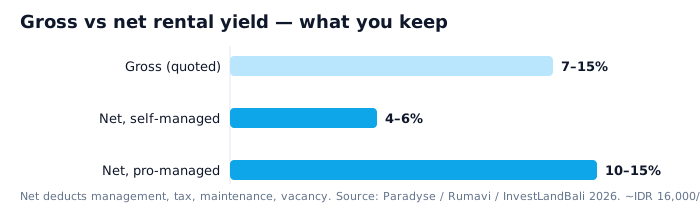
This is the most common way investors over-pay for a projection. Most “12-18% yield” claims you’ll see are gross, annual rent ÷ price, before any costs. What you actually keep is the net yield, after management, tax, maintenance and vacancy, and operating costs in saturated zones often run 20-30% higher than glossy models assume.
| Yield basis | Typical range | What it includes |
|---|---|---|
| Gross (quoted) | 7-15% (up to 12-18% Canggu/Berawa) | Annual rent ÷ price, before any costs |
| Net, self-managed | 4-6% | After tax, maintenance, vacancy; DIY operations |
| Net, professionally managed | 10-15% | After fees, with data-driven pricing & OTA distribution |
| Gross yields by area: Canggu/Berawa 12-18%; Uluwatu 10-16%; Ubud 10-15%; Seminyak 10-14%; North Bali 6-10%. Source: Prestige Property Bali 2026. |
The fix: the gap between 4-6% and 10-15% net is operations, not luck. Always underwrite on net. See the full math in our Bali villa ROI guide.
Mistake 6: treating a Bali villa as a passive, hands-off asset
Villa ownership in Bali is not passive income. Owners who pick a manager purely on low fees, defer maintenance, or run flat year-round pricing routinely see weak reviews, refunds and a sliding net yield. The villas that actually deliver the 10-15% net band use dynamic, data-driven pricing, proactive maintenance tracking and professional guest-experience systems.
The fix: choose management on transparency and revenue performance, not headline fees, and budget for proactive upkeep in Bali’s climate. Compare operating models in our long-term vs short-term rental strategy guide.
Avoid these mistakes with real, transparent numbers
See live pricing, legal structure and projected net yields across Magnum Estate’s Berawa, Sanur and Uluwatu developments.
View Magnum projects
Book a free consultation
Mistake 7: ignoring taxes and holding costs
A “high-yield” asset can quietly underperform once the real cost stack is counted. Annual land-and-building tax (PBB) is low, about 0.1% of assessed value, but transaction tax, rental-income tax, management fees, insurance and maintenance all sit between gross and net. Investors who model gross and ignore the rest consistently overpay relative to the income they keep.
The fix: build every recurring and one-off cost into your ROI from day one. Our
Bali property taxes & holding-costs guide
breaks down PBB, rental tax and the full holding stack.
Methodology & sources
Figures are indicative 2026 ranges, reconciled across multiple market datasets and converted at ~IDR 16,000/USD. Land prices are stated per m² (from per-are data, 1 are = 100 m²). Gross yields are rent ÷ price before costs; net yields deduct management, tax, maintenance and vacancy and are kept strictly separate. Ownership and permit points reflect Indonesia’s Agrarian Law No. 5/1960 and current spatial-planning enforcement. Always commission an independent appraisal and notary (PPAT) due diligence before purchase.
Limitations & who this is not for
This guide is general education, not a substitute for site-specific legal, tax and engineering advice. Ranges are island-wide indications, a single parcel can sit well outside them depending on road access, zoning, view and lease term. Bali is also not a good fit for a fully passive, set-and-forget investor, for anyone unwilling to fund proper due diligence and management, or for buyers who need guaranteed short-term liquidity: in a selective 2026 market, mispriced or non-compliant stock can take a long time to exit.
Conclusion
The Bali property investor mistakes 2026 that cost the most are avoidable: pick a legal structure the law recognises, verify zoning and permits, price on land per m² rather than hype, run real due diligence, underwrite on net yield, manage the villa professionally, and count taxes and holding costs. Do all seven and Bali remains one of the strongest yield markets in the region.
Ready to invest the right way?
Explore Magnum Estate’s ocean-view residences in Uluwatu, Berawa and Sanur, compliant title, transparent pricing and projected net yields.
Uluwatu, Sky Stars
Berawa
Sanur
FAQ: Bali property investor mistakes 2026
What is the biggest Bali property investor mistake in 2026?
Using a nominee to fake freehold, buying green-zone land or property without PBG/SLF permits, and trusting gross yield (12-18%) as if it were net. Net is only ~4-6% self-managed or ~10-15% professionally managed.
Are nominee structures a safe way to get freehold?
No. Foreigners can’t hold Hak Milik directly; nominee deals conflict with the Agrarian Law and offer weak protection. Use Leasehold (Hak Sewa) or PT PMA + HGB.
What rental yield should I actually expect?
Gross ~7-15% (up to 12-18% in Canggu/Berawa) before costs. Net is ~4-6% self-managed or ~10-15% professionally managed.
How do I confirm a villa can be legally rented daily?
Check the ITR spatial-plan map, verify title at BPN, confirm valid PBG/SLF, and ensure a Pondok Wisata (or equivalent) licence is obtainable for the coordinates and use.
Why do so many Bali villas underperform on rent?
Oversupply, platform discounting and inflated developer projections push occupancy and nightly rates below marketing models, while operating costs run 20-30% higher than assumed.
Do taxes really hurt returns?
Annual PBB is low (~0.1% of assessed value), but transaction tax, rental-income tax and fees turn gross into a much lower net, see our tax guide.
Is buying off-plan riskier?
Only if you skip due diligence on the developer’s title, permits and delivery record. A compliant off-plan unit with a clear structure can be a strong entry, verify before you commit.
References & official sources
- ATR/BPN: land titles (Hak Milik/Hak Pakai/HGB) & spatial zoning, atrbpn.go.id
- DJP / Ministry of Finance: PBB & transaction/rental taxes, pajak.go.id
- BPS, Statistics Indonesia / Bali: 2025 foreign arrivals (6,948,754, +9.72%), occupancy, bali.bps.go.id
- Bank Indonesia, Residential Property Price Index: official price-growth data & IDR rate, bi.go.id
- Agrarian Law No. 5/1960 (foreign ownership / nominee): legal text via faolex.fao.org
- Market data (2026): Paradyse Homes price-per-are study; Prestige Property Bali area/yield analysis; InvestLandBali market report; Rumavi yield data.
- Magnum Estate portfolio data (net yields by project).
About the author
Donny Yosua is a market analyst at Magnum Estate, an award-winning Bali developer (Berawa, Sanur, Sky Stars, Sky Royal). He tracks Bali pricing, yields and regulation for foreign investors.