






A ready-to-operate property can begin earning at purchase. One bought during construction cannot earn until it is completed, handed over and furnished. For income-focused investors that gap is part of the price. But completed does not mean profitable, and eight questions separate a finished building from a working investment.
Last updated 26 August 2026. Figures in USD, converted at approximately IDR 16,000 to USD 1.
When investing in property, the purchase price is usually the first number an investor looks at. For income-generating property, another question can matter just as much: when does the property actually start generating income?
A property purchased during construction may offer an attractive entry price or an early-buyer allocation, but the investor may wait months or years before it is completed, handed over, furnished and ready for rental operation. Through that period capital is committed and the asset is not yet producing operating income.
A completed property presents a different proposition. The building exists, the location can be experienced, the quality can be inspected, and the surrounding market can be judged on what is actually there rather than on plans and projections. For investors focused on rental income, that makes the decision more tangible.
The difference between buying property and buying an operating asset
This distinction is often overlooked.
When purchasing a property under development, an investor is buying into a future asset. The thesis depends on several things happening as expected: construction must complete, the finished product must match the specification, the market must still support demand on delivery, and the property must then be operated effectively.
With a completed property, some of those uncertainties have already resolved. The investor can assess the actual building, the neighbourhood, accessibility, amenities and condition before committing capital. If the property is already operating, historical rental performance may also exist, which allows the business to be evaluated on evidence rather than assumption.
This does not make completed properties better investments. They carry a different risk profile, and a different price.
Time-to-income: why two identical returns are not identical
Consider two properties at a similar price with a similar projected rental return.
Property A is under construction and expected to complete in two years. Property B is complete and can begin operating immediately.
Even if both eventually achieve the same annual return, the outcomes differ. Property A has a two-year period before it can produce any rental income. Property B can start much sooner.
There is also opportunity cost. Capital committed to a property still being developed cannot simultaneously generate rental income from that asset, and delays in construction or handover extend the period further. Time-to-income belongs alongside purchase price, projected ROI and capital appreciation, not after them.
Under construction versus complete and operating, on a comparable purchase
| Consideration | Property A, under construction | Property B, complete and operating |
|---|---|---|
| First rental income | On completion and handover | From the start of operation |
| Entry price | Development-stage pricing | Completed-asset pricing |
| Construction and delivery risk | Carried by the buyer | Already resolved |
| What can be inspected | Plans, renders, show unit, site | The finished building and its condition |
| Rental evidence available | Projection only | Possible historical operating data |
| Capital appreciation potential | Development-stage upside | Largely captured by the seller |
| Suits an investor who | Accepts delivery risk for upside | Prioritises visibility and time-to-income |
“Ready” does not automatically mean profitable
A completed property can begin operating immediately. That does not guarantee it will perform. Income still depends on location, demand, pricing, occupancy, quality, management, seasonality, operating expenses and competition.
So investors should look past the phrase “ready to operate” to what sits behind it. Eight questions do most of the work:
- Is the property in an established tourism or residential market?
- What type of guests or tenants does that location actually attract?
- Is professional management in place, and who is accountable for it?
- How will the property be marketed and distributed?
- What are the expected operating costs?
- Is the projected rental return built on realistic occupancy and rate assumptions?
- Can the completed asset be inspected before purchase?
- Is historical operating data available, and will the seller share it?
These separate a completed building from a completed investment proposition. The last two matter most, because they are the two a projection cannot answer.
Ask which number you are being shown
A projected return is a model, not a result. Ask whether a quoted figure is gross or net, what occupancy and average rate it assumes, and whether the property has ever achieved it. For a building that already operates, ask for twelve months of owner statements from a comparable unit. A property that genuinely trades can answer that question; a projection cannot, however carefully it is built.
An example: The Umalas Signature
The Umalas Signature illustrates the ready-to-operate model in Bali.
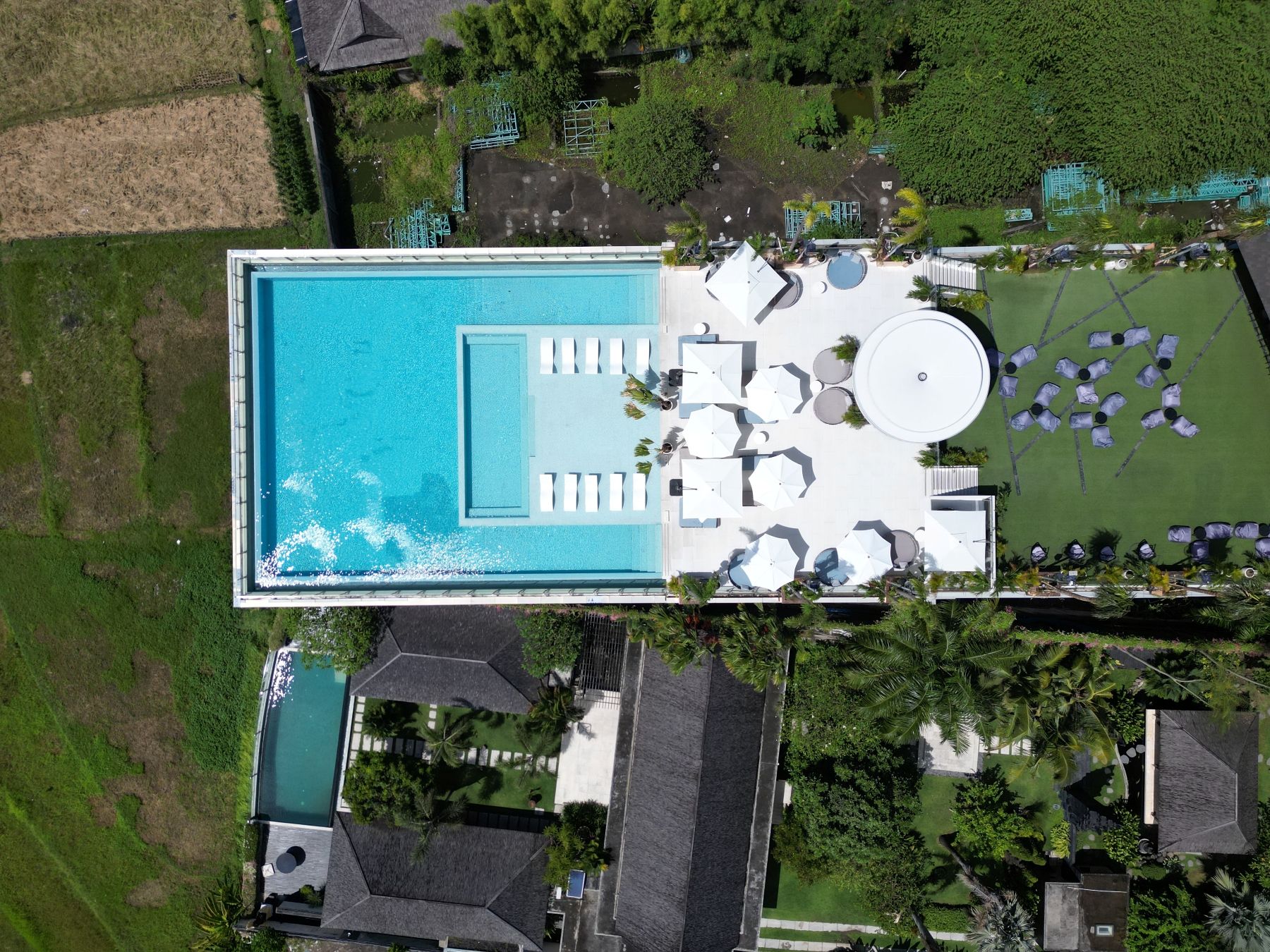
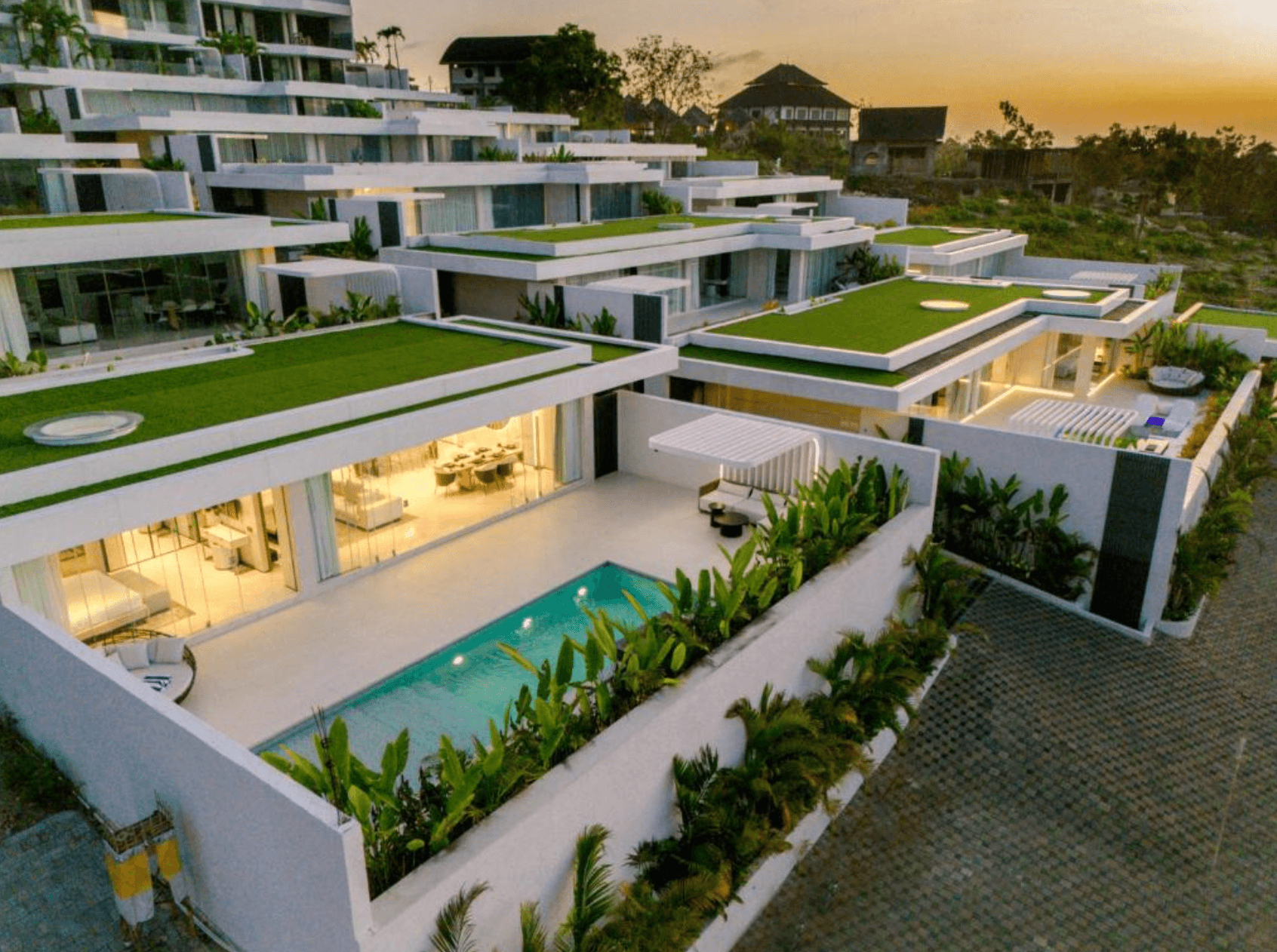
Located in Umalas, the low-rise area between Canggu and Seminyak, the development is completed and designed as a hospitality-oriented apartment residence. Apartments start from $225,000. The building already functions as an aparthotel, taking nightly and monthly stays, which means a prospective buyer can stay in it and inspect the finished product before committing. Rental operation is handled by Magnum’s in-house team in collaboration with reputable Management Company, covering marketing, guest hosting and maintenance.
For an investor, this shifts the conversation away from what the property will become. The building can be evaluated today, and rental operation can begin without waiting for another construction cycle.
Magnum publishes a projected rental ROI of 12.3% for The Umalas Signature. That is a projection rather than a guaranteed return, and actual performance depends on occupancy, rental rates, operating costs and market conditions. Across the managed portfolio, occupancy averages around 65%, which is a portfolio figure rather than a per-unit one.
The specific percentage is not the lesson. The structure is.

So should you buy during construction or buy completed?
There is no single answer.
Buying earlier gives access to development-stage pricing and the potential capital appreciation that comes with carrying delivery risk. Across Magnum’s portfolio, construction-stage purchases have added a projected 40% to 70% in value by completion. That suits investors comfortable trading risk and time for upside.
A completed, income-generating property tends to suit investors who prioritise visibility, immediate operation and a clear understanding of what they are buying. It costs more, precisely because someone else already carried the wait.
The right choice depends on objectives, risk tolerance and horizon, and for a long horizon the development-stage discount is often the larger number.
For income-focused investors, though, one principle is worth holding onto. The investment clock does not necessarily start when you sign the purchase agreement. For an income-generating property, it starts when the asset can actually operate.
Sometimes the difference between buying a property and buying an operating asset is simply time.
Limitations and sources
Prices converted at approximately IDR 16,000 to USD 1 and rounded.
Every return figure here is a projection published by Magnum Estate, not an achieved or audited result. The projected 12.3% rental ROI for The Umalas Signature, the 9.5% to 12.3% portfolio range and the projected 40% to 70% construction-to-completion value growth come from Magnum’s current price list and project documentation. The approximately 65% occupancy figure is a managed-portfolio average, not a figure for this building or any individual unit, and no separately audited figure for the Signature apartments has been published. Actual results vary by unit, season and pricing.
Independent research produces materially lower gross yield figures for Bali villas than agency projections, including ours. Our four-market comparison sets both datasets side by side with the methodology behind each, and is worth reading alongside any projected return.
Project specifications, pricing, the aparthotel operation and management terms are as published on magnumestate.com. The Umalas Signature has also been the subject of legal proceedings, set out in Magnum Estate International’s press release of 29 January 2026, “Magnum Estate Clarifies The Umalas Signature Case”, which covers Denpasar District Court case 901/Pid.B/2025/PN.DPS, the prosecutor’s appeal filed on 27 January 2026 and the civil ruling of 14 January 2026. We have not verified the current appellate status as at the date of this article.
This article is written by a developer that builds and sells property in Bali, and names one of its own projects as an example. It is general information, not investment or legal advice. Commission your own notary and adviser before committing capital.